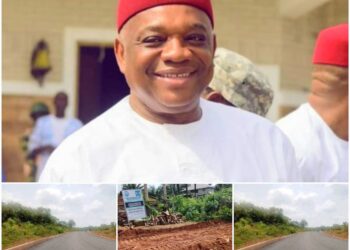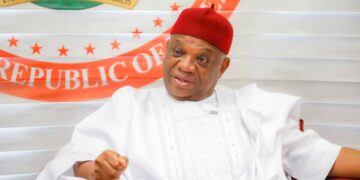


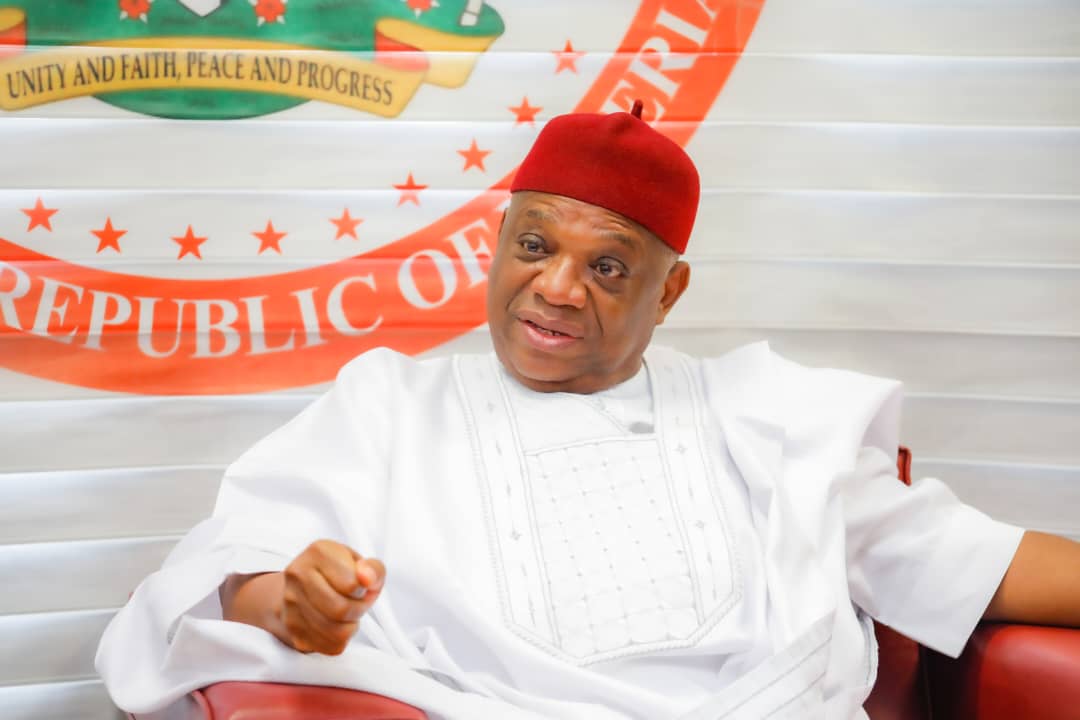
Senator Orji Uzor Kalu has urged Nigerians in the Diaspora to support President Bola Ahmed Tinubu and the All Progressives Congress (APC) ahead of the 2027 general elections, while rejecting calls for the return of petroleum subsidy.

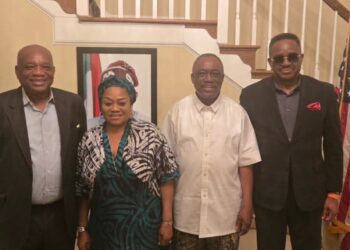
Kalu, who represents Abia North Senatorial District, spoke on Wednesday in Maryland, United States, during an interaction with a cross-section of Nigerians and Lagos indigenes living in the Diaspora.
The former Abia State governor fielded questions on the state of the Nigerian economy, the Tinubu administration’s reforms and the political direction of the country.
He also canvassed support for Lagos State Deputy Governor, Dr. Obafemi Hamzat, ahead of the 2027 governorship election in the state, describing him as a competent and experienced politician capable of leading Lagos.
Kalu endorses Hamzat for Lagos governorship
Kalu said Hamzat’s long years of service in the Lagos State Government had given him valuable experience in governance and a deep understanding of Nigeria’s diverse population.
According to the senator, Hamzat has been part of the Lagos State Government since 2006 and is familiar with the complexities of governing a cosmopolitan state.
“Governor, the Deputy Governor of Lagos State, Dr. Obafemi Hamzat, is a good choice. Yes, in kind, in person, in mind, and in everything,” Kalu said.
He added that Hamzat understood the different ethnic and cultural groups that make up Nigeria and could be trusted to contribute to the development of Lagos and the country.
“He has been in the government of Lagos State from 2006 till today. He understands government, he understands our people, he understands Nigeria, he understands the Yorubas, he understands the Hausas and the Igbos,” he said.
Kalu expressed optimism that Hamzat could help build what he described as a “new Lagos” and contribute to a Nigeria where citizens would have a greater sense of belonging.
Kalu defends Tinubu’s economic reforms
The Abia North senator also defended the economic reforms of the Tinubu administration, arguing that Nigerians should not expect fundamental economic changes to produce their full benefits immediately.
Kalu said President Tinubu had taken difficult decisions aimed at stabilising the Nigerian economy, noting that major reforms in other countries had also taken years to yield significant results.
“It’s very difficult to do reforms,” he said, while comparing Nigeria’s ongoing economic reforms with transformational policies implemented in countries such as Singapore.
Kalu, who disclosed that he contested the Nigerian presidency in 2007 before stepping down, said his political experience had given him an appreciation of the difficulties involved in governing the country.
“So, what President Tinubu is doing, I understand very well. Most people don’t understand. Most Nigerians don’t understand,” he said.
According to him, the immediate priority of the administration was to stabilise the economy and create an environment conducive to investment and economic activity.
He, however, acknowledged that despite improvements in some macroeconomic indicators, many Nigerians were still struggling at the microeconomic level.
Kalu attributed part of the difficulty to insecurity, which he said had prevented farmers and workers in some parts of the country from fully engaging in productive activities.
‘Bringing back subsidy is not best for Nigerians’
Kalu strongly opposed calls for the reinstatement of petroleum subsidy, describing the policy as unsuitable for Nigeria’s long-term economic development.
He argued that the previous subsidy regime created opportunities for fraud and financial abuse, insisting that government should instead deploy other measures to cushion the impact of economic hardship on citizens.
“I believe that bringing back subsidy is not best for Nigerians. It’s not an option to the economic development of Nigeria. Government can do other things, not fuel subsidy,” he said.
Kalu, who also referred to his exposure to the petroleum business, alleged that some companies that benefited from the former subsidy arrangement were not genuine.
“We were about 143 companies that were doing subsidy, and I can tell you that half of the 143 were fake,” he claimed.
He consequently commended Tinubu for removing the subsidy, describing the decision as difficult but necessary.
“So, President Tinubu took a major decision that most people cannot take, and this is what Nigeria requires,” Kalu said.
Senator calls for stronger security measures
While defending the Federal Government’s economic reforms, Kalu said the administration still had significant work to do, particularly in the area of national security.
He said the next phase of the government’s agenda should focus on moving Nigeria from economic stabilisation to sustainable growth.
According to him, improved security would allow farmers to return to their farms, businesses to operate more freely and economic activities to resume in rural communities.
“What we need for the growth is to fight insecurity, farmers will go back to farm, people will go back to work in the rural areas, local government will have autonomy, local government councils will start disbursing money, and society will become normal,” he said.
Kalu maintained that restoring security was critical to ensuring that the benefits of economic reforms were felt by ordinary Nigerians.
Kalu urges Nigerians to support APC in 2027
The senator also appealed to Nigerians, particularly those from the South-East, to avoid ethnic divisions in determining their political choices ahead of the 2027 elections.
He urged his audience to support the APC and work towards what he described as political consolidation rather than fragmentation.
“So, I will also appeal to you people to support our party. To support us,” Kalu said.
He argued that Nigeria’s challenges could not be addressed through ethnic or regional divisions, calling instead for greater cooperation among Nigerians.
Kalu concluded by urging Nigerians to embrace unity, compassion and mutual assistance.
“This is the time for consolidation for the government of Nigeria, for the people of Nigeria. There’s a lot of hatred among us as Igbos, as Nigerians, as people of faith. We must love ourselves, we need love more than quarreling,” he said.
“We need assistance more than fighting. We need hands to help each other. We need to be the brother’s keeper that we need to keep.”