

Cryptocurrency investors have been warned about a growing cybersecurity threat that could expose their digital assets to theft through malicious websites, with security researchers highlighting how vulnerable iPhones can be compromised simply by visiting specially crafted web pages.
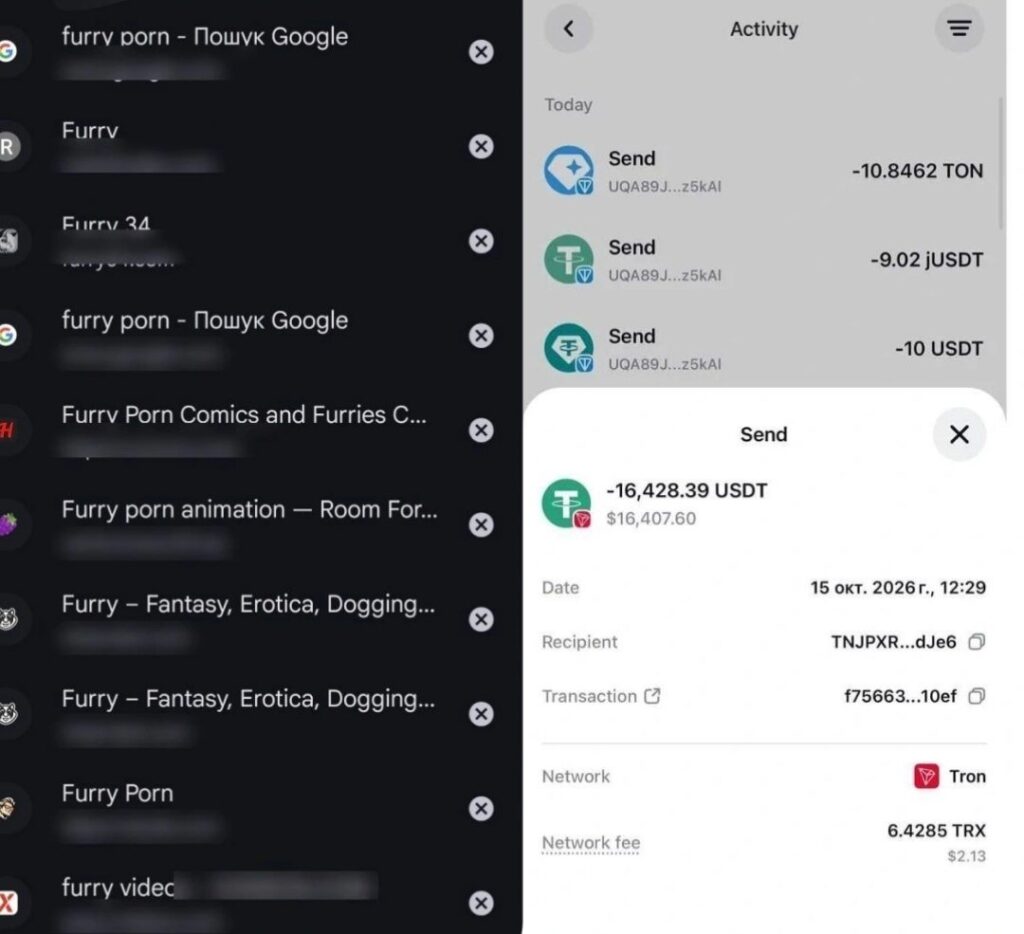
The warning follows reports of an iPhone user who allegedly lost $16,428 worth of Tether (USDT) after visiting an adult-content website, opening a video through Apple’s Safari browser and being redirected through an advertisement.
According to an investigation by blockchain analytics firm Bitquery, the reported incident occurred on October 15, when the victim’s cryptocurrency wallet transferred 16,428 USDT to an unfamiliar address. Approximately 12 seconds later, the remaining TRX in the wallet was also transferred.
The investigation further established that two other cryptocurrency wallet applications on the same iPhone were emptied.
Although the precise method used to compromise the victim’s device has not been conclusively established, investigators identified the possibility of an iOS exploit attack, including tools similar to the DarkSword exploit chain.
The incident highlights the growing risks facing cryptocurrency holders who rely on mobile devices to access and manage their digital assets.
How DarkSword Can Put iPhone Users at Risk
DarkSword is a sophisticated iOS exploit chain identified by security researchers from Google Threat Intelligence Group, Lookout and iVerify in March 2026.
The malicious tool exploits vulnerabilities in Apple’s mobile operating system and browser technologies to gain access to sensitive information stored on affected devices.
Unlike conventional phishing attacks, where victims are tricked into entering passwords or recovery phrases on fraudulent websites, DarkSword can exploit security weaknesses through specially crafted web pages.
Researchers explained that the exploit targets vulnerable iPhones through Safari and associated system components, potentially allowing attackers to bypass security restrictions and access sensitive information.
Depending on the payload deployed, compromised devices could expose saved passwords, messages, photographs, browser information, application data and cryptocurrency wallet-related information.
The threat is particularly concerning because attackers may not need victims to download a suspicious application or deliberately disclose their wallet recovery phrases before attempting to steal sensitive information.
How a Malicious Website Could Lead to Cryptocurrency Theft
A typical attack involving a browser-based exploit may begin when an unsuspecting user visits a compromised or malicious website.
The website may contain hidden scripts designed to identify vulnerabilities in the visitor’s device.
If the iPhone is running an affected iOS version, the malicious code could exploit those weaknesses to execute additional instructions and escape the browser’s security restrictions.
Once a device is successfully compromised, attackers may attempt to extract sensitive information, including cryptocurrency wallet data and recovery phrases stored in accessible files, photographs or notes.
With access to the necessary wallet credentials or recovery information, criminals may be able to take control of the victim’s cryptocurrency holdings and transfer the funds to addresses under their control.
This type of attack demonstrates why simply avoiding suspicious downloads or refusing unfamiliar transaction requests may not be sufficient protection against sophisticated mobile exploits.
However, not every malicious advertisement or website automatically compromises an iPhone. Successful exploitation depends on the vulnerabilities present, the device’s software version and the attacker’s ability to deploy the exploit.
Cryptocurrency Wallets Are Among the Potential Targets
DarkSword has attracted attention because of its ability to collect information associated with cryptocurrency applications.
Security researchers have identified several wallet applications among those targeted by related iOS information-stealing campaigns, including Coinbase, MetaMask, Phantom, Trust Wallet and Exodus.
For cryptocurrency investors, the exposure of a wallet’s recovery phrase can be particularly dangerous.
A recovery phrase, also known as a seed phrase, is a sequence of words that can be used to restore access to a cryptocurrency wallet.
Anyone who obtains the complete recovery phrase may be able to recreate the wallet on another device and gain access to its funds.
This is why storing recovery phrases in easily accessible locations, such as phone notes, screenshots, cloud storage or unprotected documents, can increase the potential damage if a device is compromised.
It is important to understand that a hardware wallet is not automatically immune to every form of attack. Users must also protect their recovery phrases and verify transactions before approving them.
How to Protect Your Cryptocurrency From Mobile Cyberattacks
With browser-based attacks becoming increasingly sophisticated, cryptocurrency users should take practical steps to strengthen their digital security.
Here are five important precautions:
1. Keep Your iPhone Updated
Install the latest iOS security updates available for your device. DarkSword exploits vulnerabilities in older software versions, and Apple has released security patches addressing the flaws used by the exploit chain.
To check for updates, navigate to Settings, select General and tap Software Update.
2. Never Store Your Recovery Phrase in Phone Notes or Screenshots
Avoid keeping your wallet’s seed phrase in screenshots, ordinary notes, messaging applications or unprotected cloud storage.
Instead, consider storing it offline in a secure location where it cannot easily be accessed through a compromised device.
3. Consider Using a Hardware Wallet
For individuals holding significant cryptocurrency investments, a reputable hardware wallet offers an additional layer of protection by keeping private keys isolated from ordinary internet-connected devices.
However, users must still protect their recovery phrases and carefully verify every transaction.
4. Be Careful With Unknown Websites and Advertisements
Avoid suspicious links, questionable websites and unexpected redirects, particularly when accessing cryptocurrency-related services.
Do not assume that a website is safe simply because it opens successfully in Safari.
5. Separate Your Everyday Wallet From Long-Term Holdings
Consider keeping only the amount needed for everyday transactions in a frequently used mobile wallet.
Larger cryptocurrency holdings can be maintained in a more securely managed wallet, reducing the potential financial damage if an everyday device or wallet is compromised.
The Bigger Lesson for Cryptocurrency Investors
The reported $16,428 USDT incident is a reminder that cryptocurrency security extends beyond protecting passwords and avoiding fraudulent investment schemes.
As attackers develop more sophisticated methods of exploiting mobile devices, even seemingly ordinary browsing activities can expose users to serious security risks when their devices are running vulnerable software.
The emergence of exploit chains such as DarkSword also demonstrates how valuable information stored on smartphones can become a target for cybercriminals.
For cryptocurrency holders, the lesson is straightforward: protecting digital assets requires securing the devices used to access them, keeping software updated and treating wallet recovery phrases as highly confidential information.
Your cryptocurrency wallet may be secured with a password, but if the device holding the information needed to access it is compromised, your digital assets could still be at risk.
For Advertisement, Press Release, Sponsored Post and Tip-Off, Contact Us at: Email: Info@abacitybloq.com |Whatsapp: +2347038111972 | Telegram: @Abacityblog