

- By Kalu Eni, PhD
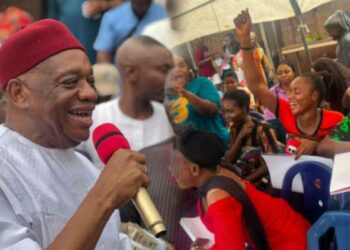
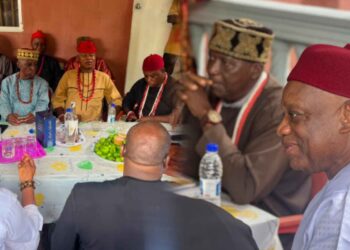
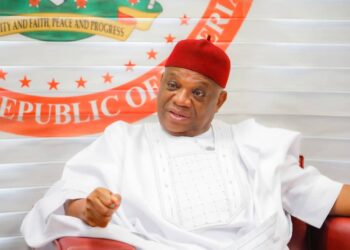
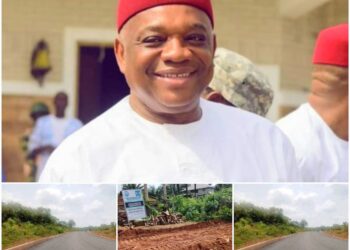
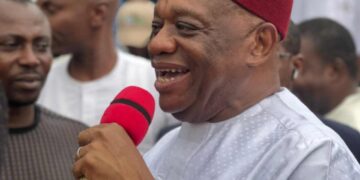
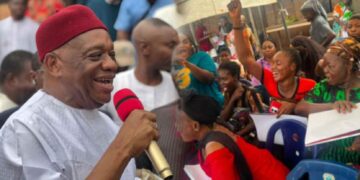
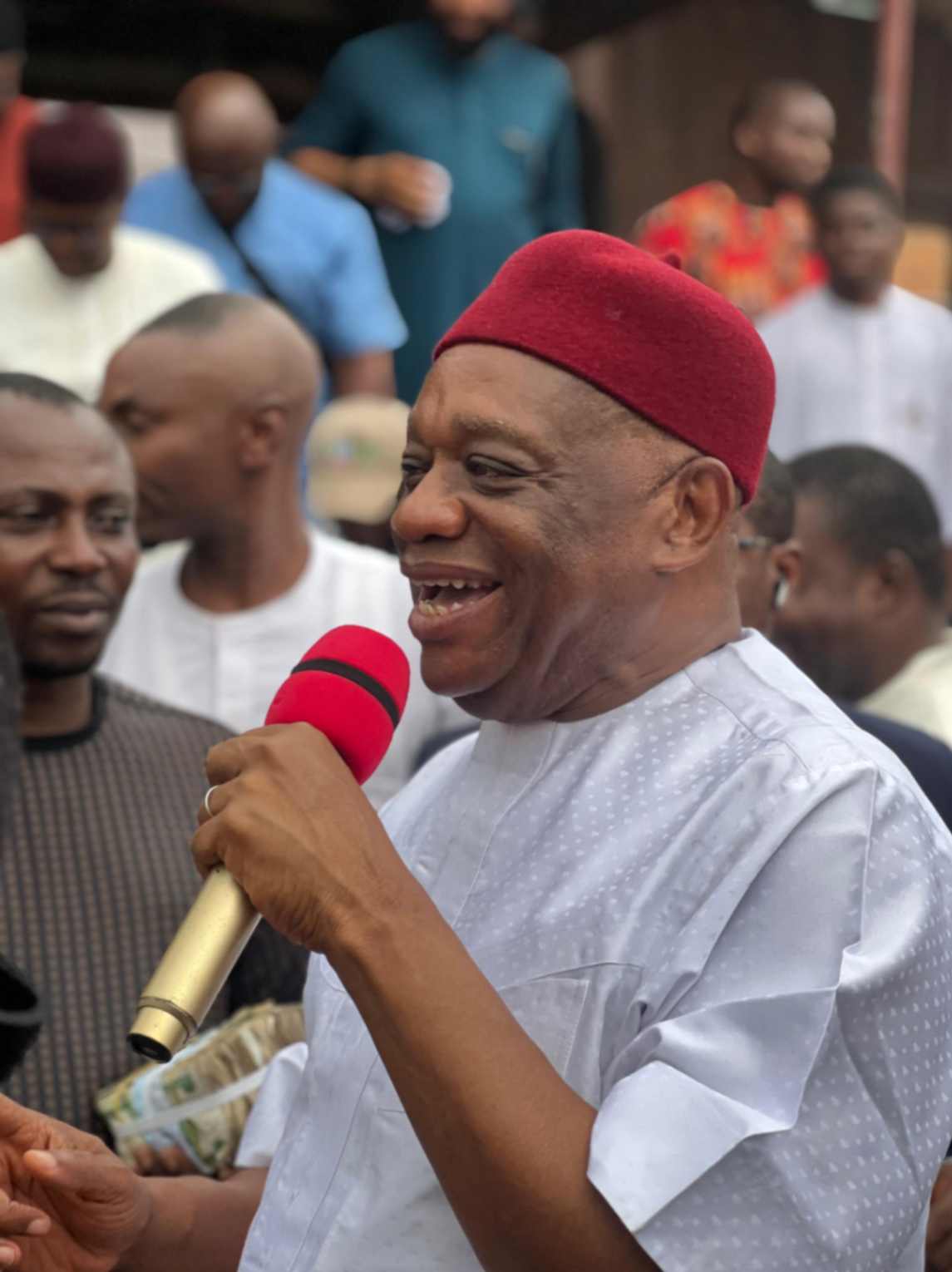
Senator Orji Uzor Kalu is back on the road in Abia North, moving from ward to ward, meeting the people, presenting his report card and, perhaps more importantly, listening to them.

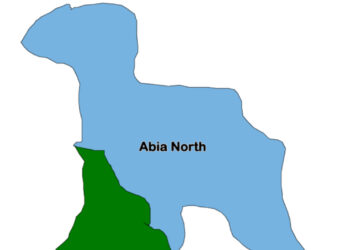
His ongoing tour has taken him to communities across Isikwuato Local Government Area, including Oguduasa, Avuvu, Nunya, Isuamawu Ward 4 in Eluama, Umubiala Ward 12 and Otamkpa Ward 3, amongst others.
There have been handshakes, laughter and dancing. But behind those warm moments is something more important: accountability. Kalu is returning to the same people who gave him their mandate, telling them what he has done with it and hearing directly from them about what remains to be done. That is the social contract.
For Kalu, this relationship did not start today. Since his election to the Senate in 2019, Abia North has witnessed interventions in roads, education, healthcare, electricity, water, agriculture, scholarships, skills development and other areas.
According to figures released by his office, more than 70 road projects have been attracted to the five local government areas of Abia North, while more than 100 schools have benefited from the construction or renovation of classrooms and other facilities.
These figures are not just numbers on a political scorecard. Many of the projects can be located in communities across Arochukwu, Bende, Isikwuato, Ohafia and Umunneochi.
In Ohafia, projects linked to his representation include the Akanu Ukwu-Abia Road, Isiugwu-Ohafia Road, Ndi Orieke Road and other rural roads. Schools have also benefited from renovation, classroom construction and educational materials.
Arochukwu has recorded similar interventions. Mary Slessor Primary School in Arochukwu received a new classroom block, while schools in Abam and other communities have benefited from renovation and educational materials. Road projects have also been facilitated in different parts of the local government.
In Bende, the Amokwe-Item-Ugwu Rubber Road is one of the better-known projects associated with his representation. Okoko Item Primary School was renovated, while schools and communities in Item, Alayi, Igbere, Nkpa, Uzuakoli, Ozuitem and other parts of Bende have received different interventions.
Isikwuato, the Land of Generals, has equally had its share. Schools in Ovim, Otamkpa, Uturu and other communities have benefited from educational interventions, while road projects, including the Eluama-Umuobiala axis, have been associated with his representation.
In Umunneochi, communities in Isuochi and Nneato have benefited from school and road interventions. In January 2026, the distribution of free school uniforms across Abia North was flagged off at Leru Central School, with pupils in Umunneochi among the beneficiaries.
Beyond buildings, Kalu has continued to invest heavily in education. Pupils across Abia North have received desks, textbooks, school bags, uniforms, sandals and other learning materials. Young people have also benefited from scholarships and international training programmes in areas such as ICT, artificial intelligence, robotics and cybersecurity.
Some beneficiaries have travelled abroad for postgraduate studies and professional training, while others are studying medicine on scholarships. This emphasis on education is not new.
As governor of Abia State between 1999 and 2007, Kalu introduced free education and other educational support programmes. Years after leaving Government House, that interest in education remains visible in his representation.
There is a simple logic behind it. Roads open communities, but education opens minds and opportunities. His work in Abuja is another part of the record that should not be overlooked. A senator is first a legislator, and Kalu has been active in that responsibility. In April 2024, findings reported by Daily Trust showed that he had sponsored more bills than any of the other former governors then serving in the 10th Senate.
His bills have covered education, electoral matters, security, environmental regulation, maritime affairs and other national issues. His legislative interests have since extended to emerging areas including electric vehicles and technology.
That matters because effective representation cannot be measured by constituency projects alone. A senator must be able to speak for his people, participate meaningfully in national debates, sponsor legislation and still use the opportunities available to his office to attract development home. Kalu has tried to combine both responsibilities. This is why his ward tour is significant.
He is not touring communities merely to tell the people what he has done. He is also hearing what has not been done. At different stops, residents have spoken about their roads, schools and other community needs. He has acknowledged those challenges and promised continued engagement.
There will always be more work to do. No serious person can argue that every road in Abia North has been fixed or that every community challenge has disappeared. But leadership must also be judged by what can be seen and verified.
A farmer does not need a long political speech to understand the importance of a motorable road to his farm. A child studying in a renovated classroom does not need to understand the politics of the National Assembly before appreciating a better learning environment. Neither does a young person given an opportunity to study or acquire specialised skills abroad need anyone to explain what that opportunity could mean for his future. This is what I call a partnership that works.
Kalu has often demonstrated that he understands the peculiar needs of his people. He has been governor, businessman, party leader, Chief Whip of the Senate and senator. That experience has given him contacts and institutional knowledge that can be useful to Abia North.
For a state proudly called God’s Own State, Kalu has become one of God’s Own working tools in public service. And Abia North still needs that tool.
Abia State needs experienced voices with access and relationships across the country. Ndigbo need leaders who can defend legitimate South East interests while maintaining relationships beyond the region. Nigeria needs bridge builders who can walk into different rooms, speak with different people and still remember where they come from.
Kalu has built relationships across political, ethnic and religious lines over several decades. Those relationships become particularly important at a time when the South East continues to demand greater inclusion in national affairs. His task now is to build on what has already been achieved.
More rural roads are needed. More schools require attention. More young people need scholarships and international exposure. Farmers and small businesses need support. Communities need water, electricity and healthcare. And the people must continue to have direct access to those elected to represent them. That is why the ward-to-ward engagement should continue.
From Arochukwu to Ohafia, from Bende to Isikwuato and Umunneochi, Kalu should continue to go back to the people, show them his record, hear their complaints and take their demands back to Abuja.
Politics will come and go. Elections will be won and lost. But a road built for a community remains useful to everyone, irrespective of party. A renovated classroom serves children whose parents may belong to different political parties. A scholarship can change the future of an entire family. That is the kind of politics Abia North should encourage.
Kalu has a record to defend and more work ahead of him. The people also have every right to question him, demand more and hold him to account.
That is how the partnership should work. That is the social contract.
Eni Kalu, PhD is a columnist, university lecturer and a proud son of Abia North Senatorial District