

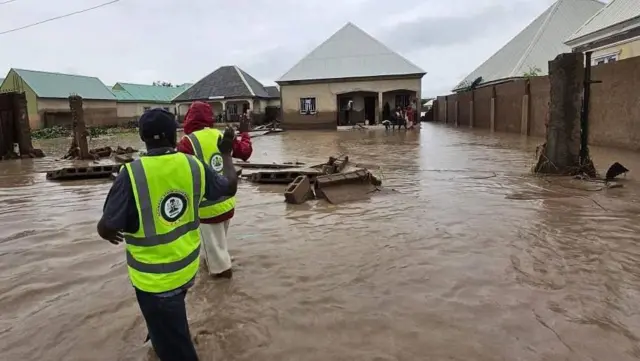
The Foundation for Environmental Rights, Advocacy & Development has raised serious concerns over the impending flood risks in Abia State following a recent alert by the Federal Government of Nigeria projecting widespread flooding across several states during the 2026 rainy season.
In a statement issued on April 16, 2026, the environmental and human rights advocacy group called for immediate preparedness, proactive mitigation measures, and strengthened community engagement, particularly in Aba and other flood-prone areas across the state.
FENRAD noted that Aba, widely regarded as the commercial hub of the South-East, has continued to experience recurrent flooding over the years due to poor drainage infrastructure, unregulated urban expansion, and indiscriminate waste disposal. With meteorological forecasts predicting heavy rainfall between April and November, and peak flooding expected from July to September, the group warned that urgent steps must be taken to prevent loss of lives, displacement of residents, and destruction of livelihoods.
The organization identified several high-risk areas within Aba, including Ariaria, Cemetery Road, Ngwa Road axis, Eziukwu, Waterside in Ogbor Hill, and Asa/Ndiegoro in Aba South Local Government Area. In Aba North, vulnerable locations include Ogbor Hill, Osusu, Uratta, World Bank Housing Estate, and Umuola axis.
Beyond Aba, FENRAD highlighted other flood and erosion-prone communities across the state. In Umuahia, areas such as Amuzukwu and the Isi Gate axis remain at risk, while Uturu in Isuikwuato Local Government Area continues to battle severe gully erosion. Riverine communities in Ugwunagbo and Ukwa West Local Government Areas are also prone to seasonal flooding, alongside communities like Mgboko, Owoahiafo, and Ntigha in Obingwa Local Government Area.
According to the group, these ecological challenges have been exacerbated by the effects of climate change and weak enforcement of environmental regulations.
FENRAD, led by its Executive Director, Nelson Nnanna Nwafor, called on the Abia State Government and relevant local authorities to urgently desilt and clear drainage systems, enforce environmental sanitation laws, strengthen urban planning compliance, and invest in resilient infrastructure.
The group also urged community leaders, youth groups, and residents to intensify grassroots sensitization efforts, adopt proper waste disposal practices, and identify safe evacuation routes as part of community-based flood preparedness strategies.
Furthermore, FENRAD appealed to the National Emergency Management Agency and the Abia State Emergency Management Agency to enhance early warning systems, deploy emergency response teams, and pre-position relief materials in vulnerable communities.
Civil society organizations and development partners were encouraged to support climate adaptation initiatives, public awareness campaigns, and humanitarian interventions targeting at-risk populations, while media organizations were tasked with sustaining public enlightenment and ensuring timely dissemination of verified information.
FENRAD emphasized that flood disasters can be significantly mitigated through proactive planning, responsible environmental practices, and strong community engagement. The organization reiterated its commitment to working with government institutions, communities, and stakeholders to promote environmental sustainability, accountability, and disaster risk reduction.
“The time to act is now. Preparedness today will save lives tomorrow,” the statement concluded.
For Advertisement, Press Release, Sponsored Post and Tip-Off, Contact Us at: Email: Info@abacitybloq.com |Whatsapp: +2347038111972 | Telegram: @Abacityblog