

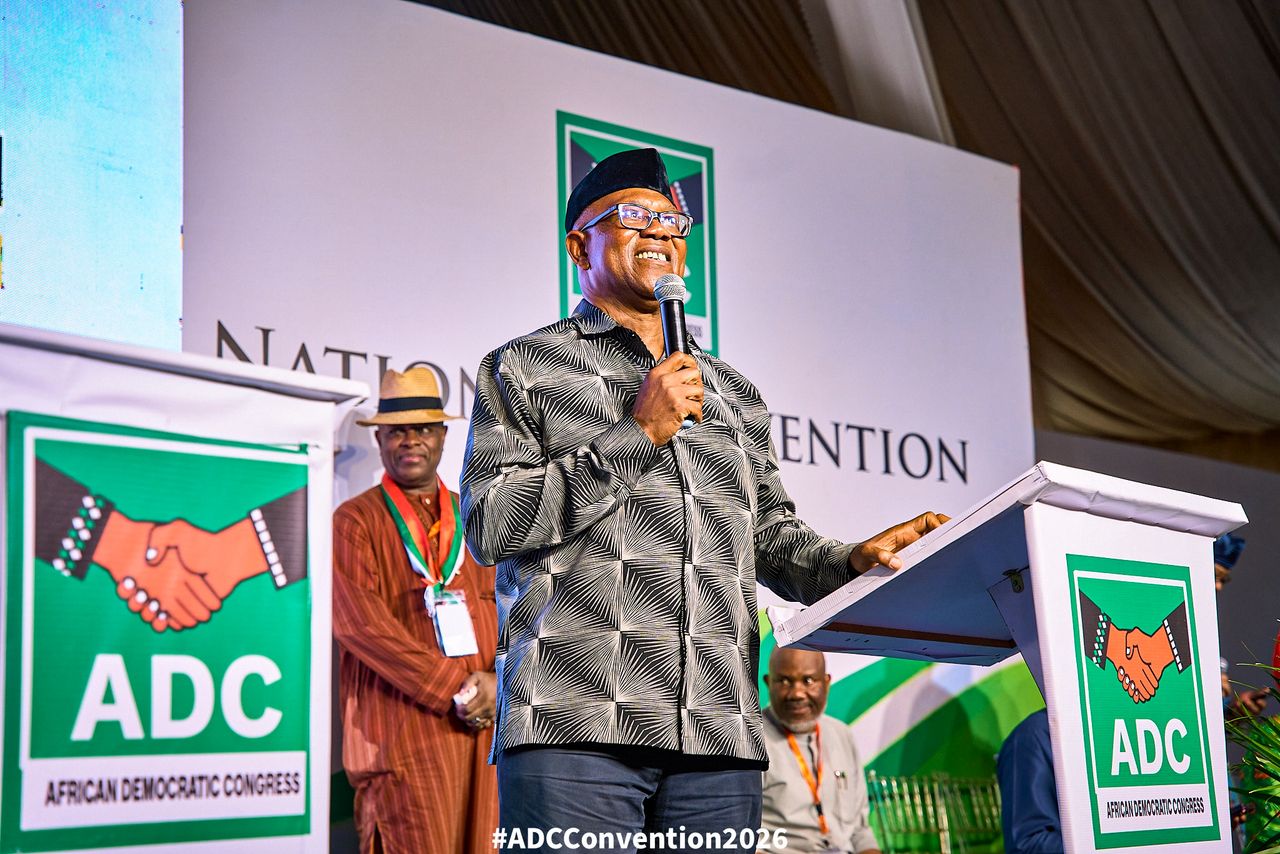
Former presidential candidate of the Labour Party, Mr. Peter Obi, has announced his exit from the African Democratic Congress (ADC), citing rising internal crises, external political interference, and what he described as a deteriorating political environment within the party.

In a statement publish on his official X account, Obi spoke candidly about personal struggles and broader concerns over Nigeria’s political culture, describing it as increasingly toxic and discouraging for sincere participation.
He lamented what he called a system where intimidation, insecurity, suspicion, and internal sabotage have become common features of political life, making it difficult for genuine service-driven leadership to thrive.
According to him, even within political structures he had hoped would offer solidarity, he often found himself facing isolation and criticism from both allies and associates.
Obi emphasized that his decision to leave the ADC was not due to personal conflict with the party leadership. He specifically noted that neither the party’s National Chairman, Senator David Mark, nor former Vice President Atiku Abubakar or other senior figures had treated him unfairly on a personal level.
Rather, he alleged that persistent interference and instability within Nigeria’s political system had begun to manifest within the ADC, mirroring earlier challenges he experienced in the Labour Party. He pointed to recurring legal disputes, internal divisions, and distrust as signs of a deeper structural problem.
He said:
“Let me state clearly: my decision to leave the ADC is not because our highly respected Chairman, Senator David Mark, treated me badly, nor because my leader and elder brother, Alhaji Atiku Abubakar, or any other respected leaders did anything personally wrong to me. I will continue to respect them.
“However, the same Nigerian state and its agents that created unnecessary crises and hostility within the Labour Party that forced me to leave now appear to be finding their way into the ADC, with endless court cases, internal battles, suspicion, and division, instead of focusing on deeper national problems and playing politics built more on control and exclusion than on service and nation-building.
He further expressed concern that political spaces meant for collaboration were increasingly becoming arenas of suspicion, where contributions are undervalued and individuals are often scapegoated for broader failures.
Obi also reflected on the personal toll of political engagement, stating that humility is often misinterpreted as weakness, while integrity and prudent resource management are frequently misunderstood in the Nigerian context.
Reaffirming his broader vision, Obi said he is not driven by personal ambition for political office such as President, Vice President, or Senate President. Instead, he said his focus remains on advocating for a Nigeria where citizens can live in safety, access basic needs, and avoid the hardships of displacement, hunger, and insecurity.
He said:
“Let me assure all that I am not desperate to be President, Vice President, or Senate President. I am desperate to see a society that can console a mother whose child has been kidnapped or killed while going to school or work. I am desperate to see a Nigeria where people will not live in IDP camps but in their homes. I am desperate for a country where Nigerian citizens do not go to bed hungry, not knowing where their next meal will come from.
Despite his departure from the ADC, Obi maintained that he remains committed to the idea of national transformation, insisting that Nigeria can still achieve a leadership system grounded in justice, compassion, and equal opportunity.
He ended his message on an optimistic note, reiterating his belief that “a new Nigeria is possible.”