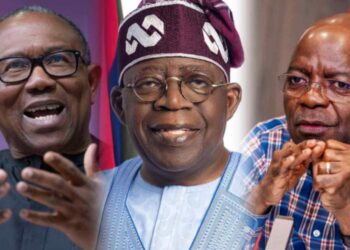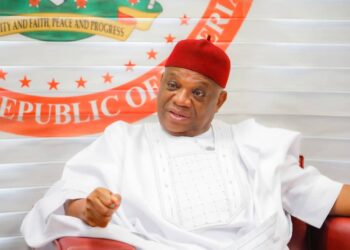


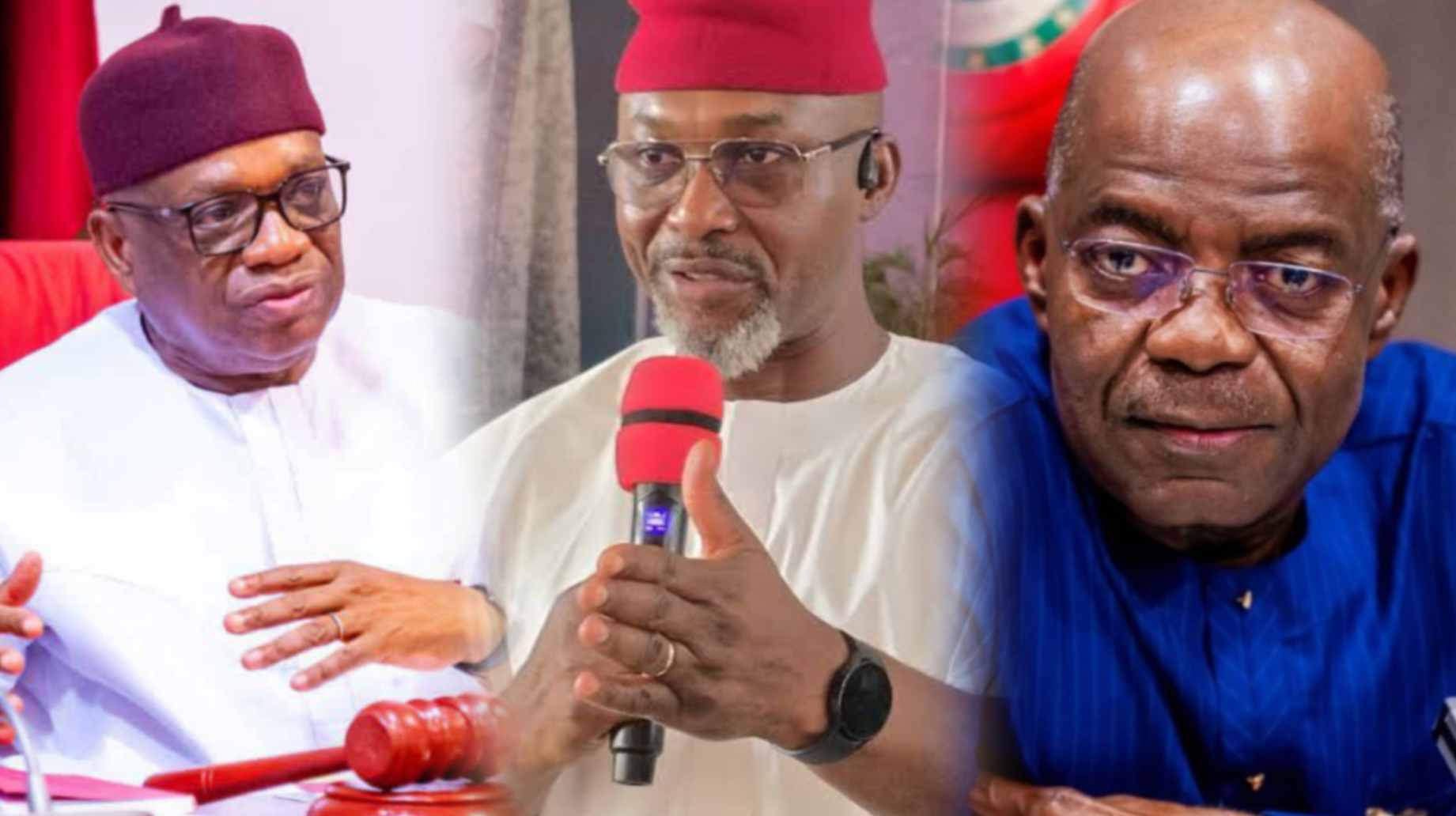
Former Minister of Aviation, Osita Chidoka, has identified leadership as a major factor in determining Abia State’s changing fortunes over the past 35 years, recalling how former Governor Orji Uzor Kalu gave the state unusual visibility in national politics during the early years of Nigeria’s Fourth Republic.
Chidoka, however, said the prominence Abia enjoyed during that period was not sustained after Kalu left office, pointing to what he described as subsequent deterioration in infrastructure and a decline in the state’s national standing.
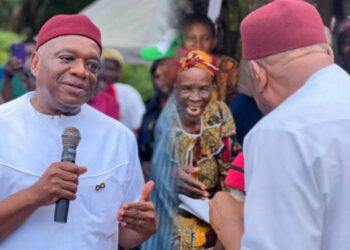
He spoke while delivering a keynote lecture at activities marking the 35th anniversary of Abia State, where he examined what he described as defining moments in the state’s political and developmental journey.
According to the former minister, the emergence of democratic rule in 1999 presented the South East with the challenge of rebuilding its political relevance, and Kalu was able to recognise and exploit that moment.
“At the beginning of the Fourth Republic, the South East was searching for voice and relevance in the new democratic order. Orji Uzor Kalu understood that moment,” Chidoka said.
He described Kalu, who became governor in 1999, as young, assertive and politically visible, qualities he said enabled the former governor to project Abia beyond the state’s geographical size and population.
“He put Abia firmly in the national conversation. Abia punched above its weight,” he added.
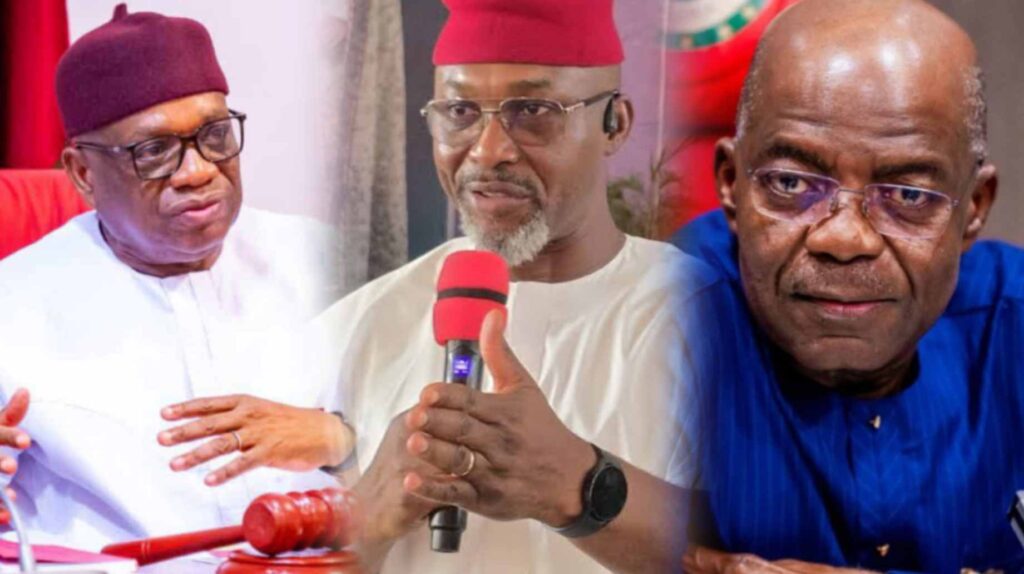
Kalu’s administration, which lasted from 1999 to 2007, coincided with the formative years of Nigeria’s Fourth Republic. Chidoka’s assessment was that the former governor’s national political visibility helped give Abia and the wider South East a stronger presence in the country’s emerging democratic discourse.
But Chidoka said the political and developmental momentum associated with that period gradually weakened after Kalu’s departure.
“Over time, that moment faded. Infrastructure deteriorated, the state’s national standing diminished, and Aba increasingly seemed to succeed despite government rather than because of it,” he said.
His reference to Aba highlighted what he presented as a broader tension in Abia’s development story: the resilience and entrepreneurial strength of its people often continued despite weaknesses in public infrastructure and governance.
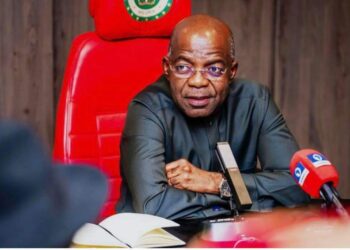
Chidoka, however, said Abia now appeared to be at another critical juncture, pointing to the administration of Governor Alex Otti as a potential new defining moment for the state.
He said Otti appeared to understand the importance of restoring confidence in government while addressing infrastructure deficits and rebuilding what he described as Abia’s “sense of possibility.”
“Alex Otti appears to have understood this one: a moment to restore confidence in government, rebuild infrastructure and recover Abia’s sense of possibility,” Chidoka said.
But for Chidoka, the central question is not simply whether one administration can deliver visible improvements. Rather, he argued that Abia must develop institutions capable of preserving progress after individual political leaders leave office.
He challenged the conventional argument that African societies must choose between strong leaders and strong institutions.
“We often say Africa needs strong institutions, not strong men. I agree that no society should depend indefinitely on one individual. But who creates strong institutions when the institutions themselves are weak?” he asked.
Using Moses as an illustration, Chidoka argued that transformative leadership can sometimes be necessary before enduring institutions can emerge.
“My argument is that the real choice is not between strong leaders and strong institutions. At critical moments, societies need leaders with the capacity to build institutions that eventually become stronger than their founders,” he said.
He drew a distinction between leadership that concentrates power around an individual and leadership that deliberately builds systems capable of functioning independently.
“The strongman makes himself indispensable. The strong leader builds a system that can eventually work without him,” Chidoka stated.
The former minister said this should be the ultimate test of the current moment in Abia — whether the progress and reforms being pursued can eventually become institutionalised rather than remaining tied to the personality or tenure of a particular governor.
He therefore posed a question he described as critical to the state’s future:
“Can the present Abia moment become the permanent Abia standard?”
Abia State was created on August 27, 1991, and marked its 35th anniversary in 2026. Kalu served as governor from 1999 to 2007 and currently represents Abia North Senatorial District in the National Assembly.
For Advertisement, Press Release, Sponsored Post and Tip-Off, Contact Us at: Email: Info@abacitybloq.com |Whatsapp: +2347038111972 | Telegram: @Abacityblog