

- By Eni Kalu, PhD
Every election season comes with familiar excitement. New aspirants emerge, promises are renewed, and politicians suddenly discover communities they have hardly visited since the previous election. Posters appear, speeches become louder and voters are asked to forget yesterday and place their faith in tomorrow.
But elections should not always be about who makes the newest promise. Sometimes, the wiser question is: who has already shown that he can do the work?
That is the question the people of Abia North must confront as the 2027 general election approaches. Beyond party slogans, personal loyalties and the usual political noise, the choice before the district should be based on a fair assessment of service, experience, influence and visible results.
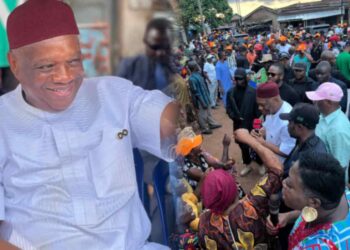
Measured by those standards, Senator Orji Uzor Kalu still matters. Kalu’s relationship with the people did not begin with his election to the Senate in 2019. His record of public service stretches back to his years as Governor of Abia State between 1999 and 2007. He took office at the beginning of Nigeria’s return to democratic rule, at a time when state institutions were weak, public expectations were high and the responsibilities of rebuilding after years of military government were enormous.
Those who lived in Abia during that period remember an administration that made education one of its defining priorities. Public school pupils received free education and learning materials. Teachers and civil servants were paid regularly, while the government invested in roads, schools and healthcare facilities. Even Governor Alex Otti, despite belonging to a different political generation and platform, has publicly recalled Kalu’s road construction in Aba, the regular payment of teachers and the provision of free education and learning materials during that era.
The importance of this record should not be lost in present-day political arguments. At a time when education was beyond the reach of many poor families, Kalu’s government helped to keep children in school. The policy was not merely a line in a budget speech. Parents felt its effect in their homes because the burden of school fees and basic learning materials was reduced.
His administration also built and equipped the Abia State University Teaching Hospital in Aba and invested in Abia State University. The university’s Faculty of Law gained national recognition, with its graduates recording notable performances at the Nigerian Law School during that period.
There were also road projects in Aba, Umuahia and communities outside the major cities. Streets that had been neglected received attention, improving movement, sanitation and commercial activity. Roads such as Ekwuruke, Obowo, Cameroon, Oboro, Oji River, Afara, Ogbulafor, Uwalaka, Orlu and Igbere have been cited among those constructed or rehabilitated under his administration.
No government is perfect, and no honest assessment of an eight-year administration should pretend that every problem was solved. That is not the point. The point is that Kalu left office with a recognisable record in education, infrastructure, healthcare, workers’ welfare and community development. More importantly, he did not end his relationship with the people after leaving Government House.
That is where his political journey differs from that of many former governors. Some politicians treat public office as a season. When the season ends, they disappear until another opportunity presents itself. Kalu remained engaged. He continued to support communities, maintain relationships and create opportunities through his personal, business and political contacts. When he eventually entered the Senate, he arrived with something a first-time politician could not manufacture overnight: national reach, institutional knowledge and decades of relationships across government, business and international circles.
Contacts in politics are not an achievement by themselves. What matters is what a leader does with them. Kalu has repeatedly used his relationships to draw attention and resources to Abia North. His access has helped constituents secure scholarships, international training, federal projects and empowerment opportunities. That is the practical value of political influence. It should not remain in Abuja, inside government offices or around powerful friends. It must travel home.
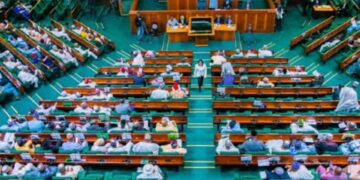
In the Senate, he has combined lawmaking with constituency development. The official records of the National Assembly confirm his sponsorship of bills addressing maritime trade, education, environmental regulation, food security, taxation and constitutional reform. In the current Senate, these include the Coastal and Inland Shipping (Cabotage) Act Amendment Bill, 2023; the Compulsory Free Universal Basic Education Act Amendment Bill, 2023; the National Environmental Standards and Regulations Agency Act Amendment Bill, 2024; the National Food Bank Establishment Bill, 2024; the Tax Crime Commission Bill, 2024; and a constitutional alteration bill introduced in 2025.
His wider legislative record since 2019 also includes the Administration of Criminal Justice Act Amendment Bill; the Armed Forces Act Amendment Bill proposing fixed tenures for service chiefs; a bill to establish the Federal University of Medical Sciences and Biomedical Technology at Umunna in Bende Local Government Area; the National Agriculture Improvement Board Establishment Bill; the Nigeria Women Trust Fund Bill; the Citizens Welfare Bill; the Nigerian Electricity Health and Safety Bill; and legislation seeking better protection and a safer working environment for journalists and media professionals.
Other measures associated with his legislative work include the Nigeria Chinese Language Village Establishment Bill, the Primary Healthcare and Universal Health Coverage Bill, the Green Economy Bill, the Energy Efficiency in Public Buildings Bill, the National Crisis Prevention, Response and Recovery Agency Bill, and proposed amendments affecting the Police Act, Fire Service Act, Code of Conduct Bureau Act and Bank Employees’ Declaration of Assets Act.
More recently, his Electric Vehicle Transition and Green Mobility Bill advanced to second reading in the Senate. The bill seeks to establish a national framework for Nigeria’s transition to electric vehicles, encourage local manufacturing and prepare the country for changes already taking place in global transportation.
This range is important. It shows a legislator thinking beyond his immediate constituency while remaining attentive to local needs. Food security affects the farmer in Bende. Basic education affects the child in Umunneochi. Environmental regulation matters to communities threatened by erosion and pollution. Maritime reform affects national commerce. Electric mobility speaks to the industries and jobs of the future.
Still, the average constituent does not judge a senator by the number of bills bearing his name alone. People want to see what representation has brought to their communities. On that score, Kalu has a substantial record to present.
Across Arochukwu, Bende, Isuikwuato, Ohafia and Umunneochi, his representation has been linked to more than 70 road projects. Some have been completed, while others are at different stages of implementation. These roads connect villages, farms, markets, schools and health centres. To someone looking at a project list from Abuja, a rural road may appear to be another statistic. To the farmer who needs to move produce to the market or the pregnant woman travelling to a health centre, it can make a profound difference.
His intervention in education has been equally extensive. More than 100 schools have reportedly benefited from construction or renovation, with classrooms, desks and learning facilities provided in communities across the district. Pupils have received free STEM textbooks, uniforms, sandals and instructional materials. A 2026 account of the programme reported more than 100 school projects alongside healthcare and overseas training interventions.
These efforts continue a pattern that can be traced to his governorship years: the belief that children from poor homes should not be left behind because of circumstances they did not create.
Healthcare interventions have also reached mothers, elderly people and vulnerable residents through free medical programmes and enrolment under the National Health Insurance Scheme. More than 500 residents were reported as beneficiaries of one recent free healthcare initiative. For families that cannot easily afford hospital bills, such interventions are not political decorations. They offer real relief.
Kalu has also paid attention to human capital development. Constituents have been selected for specialised programmes abroad, including training in cybersecurity and other technical fields in China. Young people from Abia North have benefited from scholarships to study Medicine and Surgery, business and postgraduate programmes in different countries.
This is one of the less dramatic but more enduring aspects of his representation. A road may be commissioned before cameras. A scholarship beneficiary may return quietly after several years. Yet that trained doctor, engineer, researcher or technology specialist may eventually serve society for decades. That is how human capital development works. Its results are not always immediate, but they last.
Thousands of women and young people have also received sewing machines, farming tools, motorcycles, tricycles, business equipment and other livelihood support. Some critics dismiss empowerment programmes because politicians have often reduced them to election-season handouts. That criticism is understandable. But where the support gives a tailor, farmer, artisan or small trader the means to earn a living, its value should not be dismissed.
There is also a growing industrial dimension to Kalu’s interventions. The completed cashew processing factory in Igbere offers an opportunity to add value to agricultural produce rather than selling everything in its raw form. The solar panel factory and tricycle manufacturing project, when fully operational, can support local production, technical training and employment.
These projects deserve continuity because factories are not built, equipped, staffed and made commercially sustainable in one day. They require follow-through, partnerships and access to federal agencies and investors. Abandoning such initiatives midway because the political calendar has changed would not serve the people.
This is the central argument for continuity in Abia North. It is not that one person owns the district or that no other citizen has the right to aspire. Democracy must remain open, competitive and accountable. Nor does continuity mean that a public official should be spared criticism. Kalu must continue to answer questions, listen to dissatisfied constituents and improve areas where expectations have not been met.
But democracy should also reward work. It makes little sense to ask leaders to perform and then pretend that performance does not matter when elections arrive. Where a representative has built useful relationships, attracted roads and school projects, supported healthcare, created international opportunities, sponsored serious legislation and initiated investments, voters are entitled to consider whether retaining that experience is better than starting afresh.
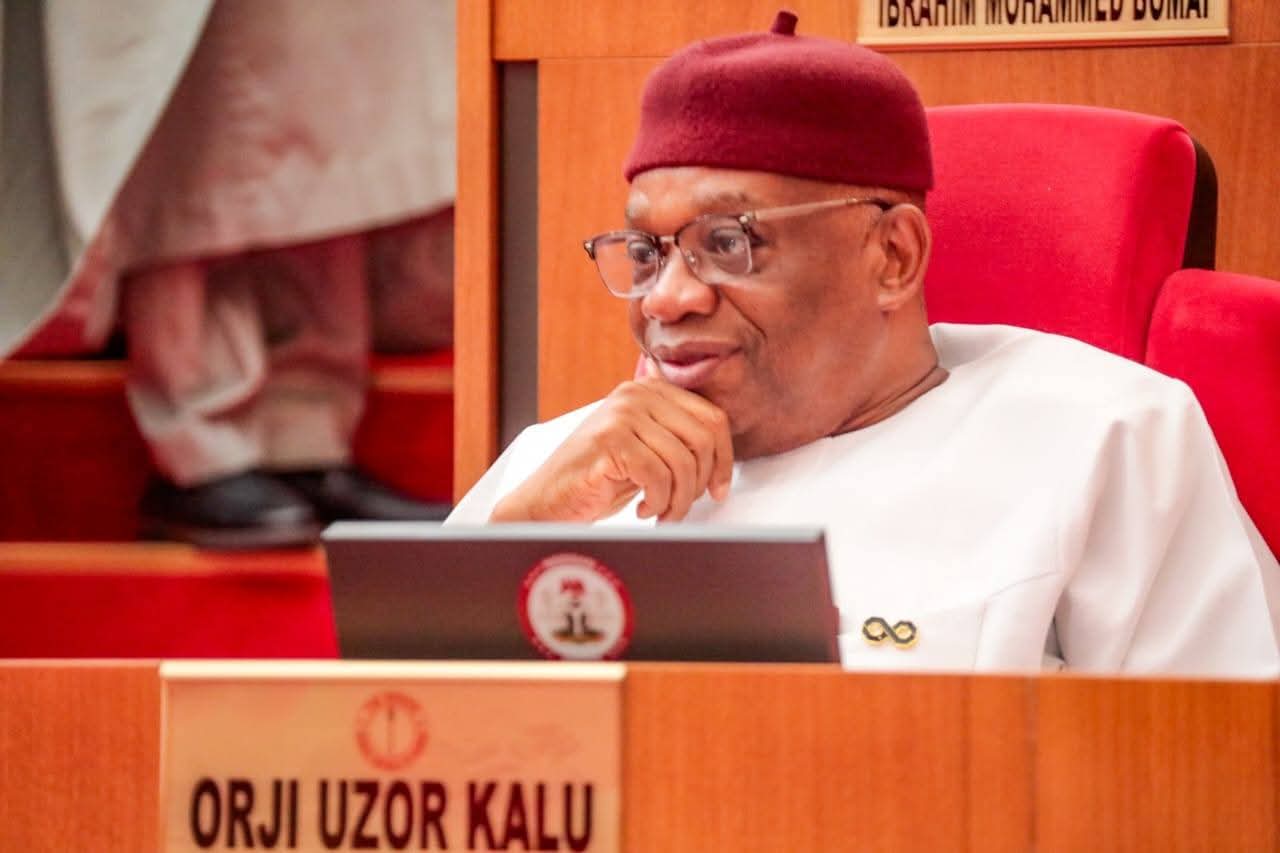
Seniority also matters in the National Assembly. Legislative influence grows with experience, committee responsibilities and relationships developed over time. Kalu currently chairs the Senate Committee on the South East Development Commission, a position that places him within an important structure created to address the region’s development challenges. Abia North should think carefully before surrendering accumulated influence that can be used to attract a larger share of federal and regional development.
The district still has serious needs. More roads must be completed. Schools require further improvement. Healthcare access must reach more villages. Erosion continues to threaten communities. Young people need jobs, skills and access to capital. Agricultural production needs processing facilities, while electricity remains essential for local enterprise.
The work is not finished. But unfinished work is not evidence of failure where steady progress can be seen. It is an argument for greater effort and, in the right circumstances, continuity.
Orji Uzor Kalu still matters because he understands both the language of the village square and the corridors of national power. He knows the communities he represents, but he also knows how to reach institutions capable of assisting them. He has friends and contacts across political parties, regions, businesses and countries. Most importantly, there is evidence that he has used those relationships for the benefit of his people.
From free education during his years as governor to school rehabilitation as a senator; from paying attention to workers’ welfare to facilitating healthcare for vulnerable constituents; from constructing roads in Abia to attracting road projects across Abia North; and from supporting local enterprise to opening international training opportunities for young people, a clear thread runs through his public career.
It is the thread of service. As 2027 approaches, the people of Abia North should not be distracted by noise or persuaded by promises that have no history behind them. They should examine the record, compare it with the alternatives and decide what best protects the progress already made. Continuity should not be demanded as a favour. It should be earned by work.
In Orji Uzor Kalu’s case, there is enough work on the ground, enough legislative activity in the Senate and enough evidence of long-standing service to make that case convincingly. That is why he still matters. That is why the journey should continue.
For Advertisement, Press Release, Sponsored Post and Tip-Off, Contact Us at: Email: Info@abacitybloq.com |Whatsapp: +2347038111972 | Telegram: @Abacityblog