


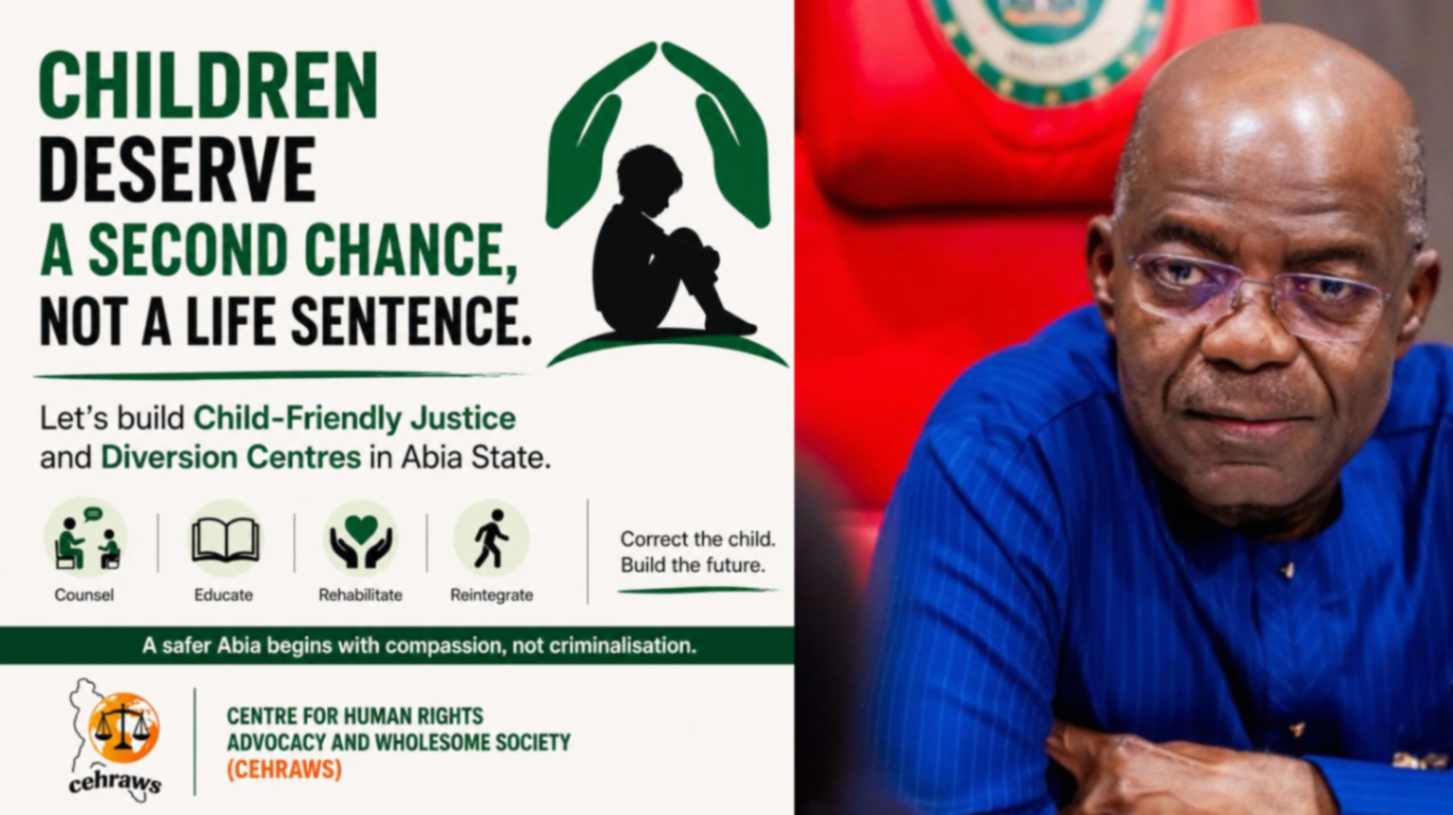
The Centre for Human Rights Advocacy and Wholesome Society (CEHRAWS) has called on the Abia State Government to establish Child-Friendly Justice and Diversion Centres as part of efforts to strengthen the protection, rehabilitation and reintegration of children who come into conflict with the law.
The appeal was contained in an open letter dated July 18, 2026, addressed to Governor Alex Chioma Otti and the First Lady, Mrs. Priscilla Chidinma Otti, in which the organisation urged the state government to initiate policy and legislative measures for the creation of the centres across Abia.
Signed by the Executive Director of CEHRAWS, Mr. Chuka Peter Okoye, the letter commended the Otti administration for its investments in education, healthcare, social protection and institutional reforms aimed at improving the welfare of children in the state.
The organisation also lauded the humanitarian initiatives of the First Lady, describing her interventions in support of women and children as a source of hope for vulnerable families.
CEHRAWS, a non-partisan civil rights organisation and member of the Child Protection Network (CPN)-Nigeria, said the establishment of Child-Friendly Justice and Diversion Centres would complement the administration’s ongoing reforms while positioning Abia among states leading the implementation of child-rights compliant justice systems.
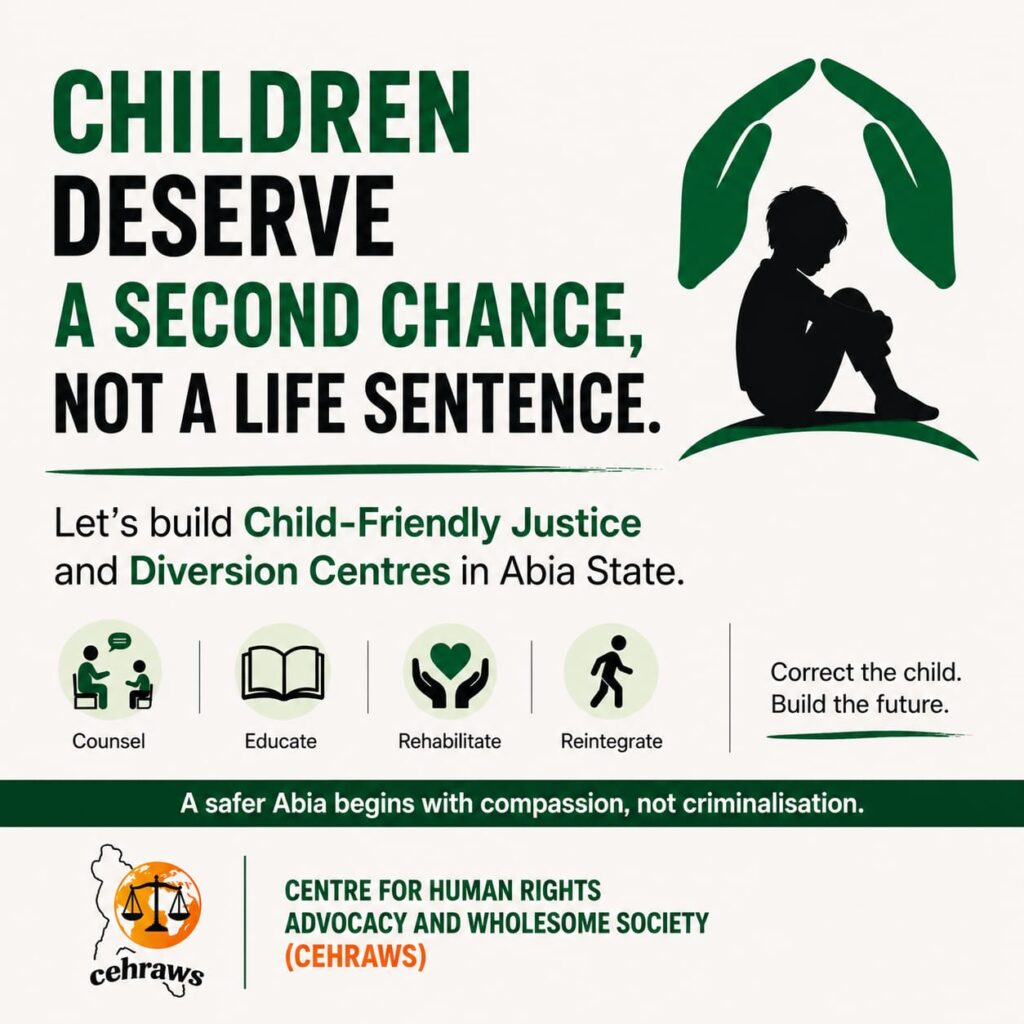
According to the organisation, children who commit minor offences should be given opportunities for counselling, education, family intervention, vocational training and rehabilitation instead of being subjected to detention or prolonged criminal prosecution.
It noted that many children who come into conflict with the law are often victims of poverty, broken homes, neglect, abuse, peer pressure, drug addiction and other adverse social conditions, rather than hardened criminals.
“A Child-Friendly Justice System ensures that the age, emotional development, vulnerability and best interests of the child are taken into consideration whenever a child is alleged to have committed an offence,” the organisation stated.
It explained that diversion centres are not detention facilities but rehabilitation centres where psychologists, social workers, counsellors, legal practitioners and child protection professionals work together to reform children and facilitate their successful reintegration into society.
CEHRAWS pointed out that the proposed initiative is backed by both national and international legal frameworks, including the 1999 Constitution of the Federal Republic of Nigeria (as amended), the Child Rights Act, the Abia State Child Rights Law, the Administration of Criminal Justice framework, the United Nations Convention on the Rights of the Child, the African Charter on the Rights and Welfare of the Child, and the United Nations Standard Minimum Rules for the Administration of Juvenile Justice, popularly known as the Beijing Rules.
The organisation argued that establishing the centres would help reduce juvenile delinquency, discourage repeat offending, decongest correctional facilities and protect children from the lifelong stigma associated with criminal convictions.
It further stated that the initiative would strengthen collaboration among relevant government ministries, the judiciary, security agencies, civil society organisations, traditional institutions, faith-based organisations and development partners, including UNICEF, in advancing child protection and restorative justice.
The group urged Governor Otti to direct relevant Ministries, Departments and Agencies to commence the policy and legislative processes necessary for establishing the centres, while appealing to the First Lady to champion advocacy for restorative juvenile justice and comprehensive child protection across the state.
CEHRAWS reaffirmed its readiness to partner with the Abia State Government, UNICEF, the Child Protection Network and other stakeholders to develop and implement the proposed reform.
The organisation maintained that investing in rehabilitation rather than punishment would provide vulnerable children with opportunities to reform and become responsible members of society, expressing confidence that Abia could become a model for child-friendly justice in Nigeria through the initiative.
For Advertisement, Press Release, Sponsored Post and Tip-Off, Contact Us at: Email: Info@abacitybloq.com |Whatsapp: +2347038111972 | Telegram: @Abacityblog