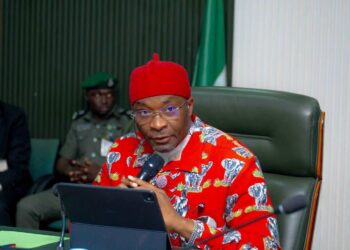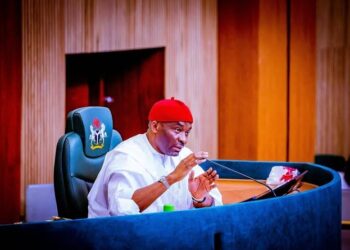


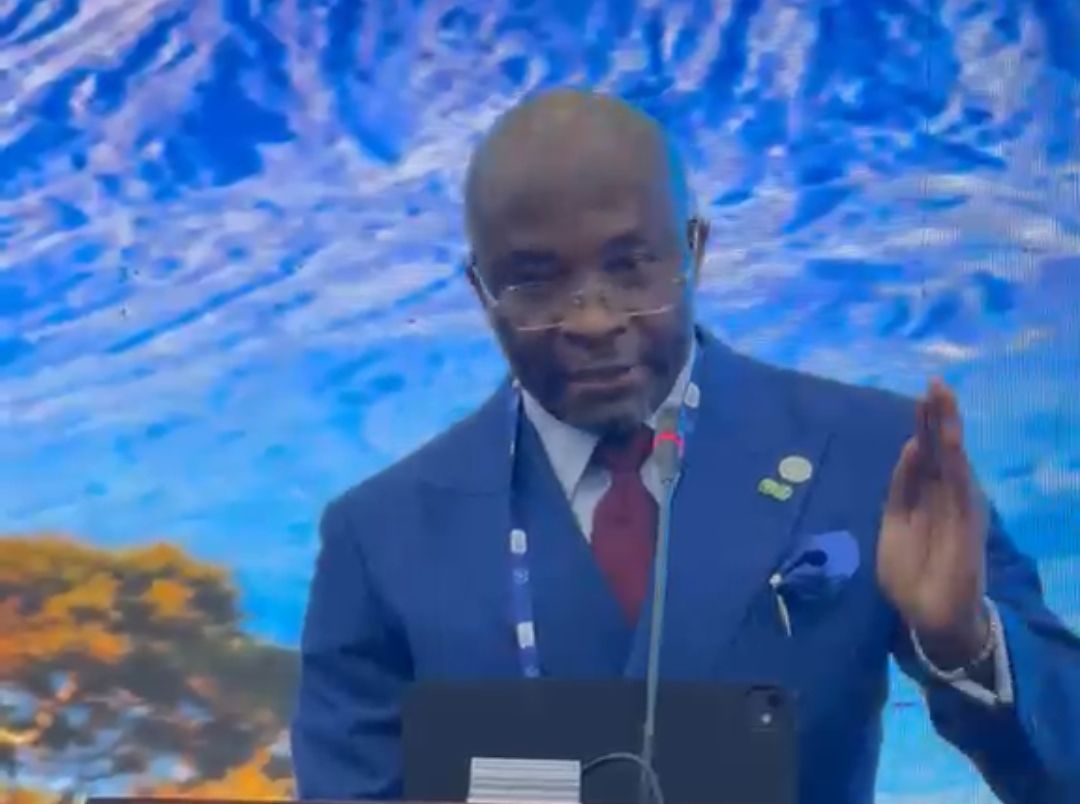
Deputy Speaker of the House of Representatives, Rt. Hon. Benjamin Okezie Kalu, has called for structured legislative interventions across the world to address climate-related disasters and strengthen resilience in vulnerable communities.
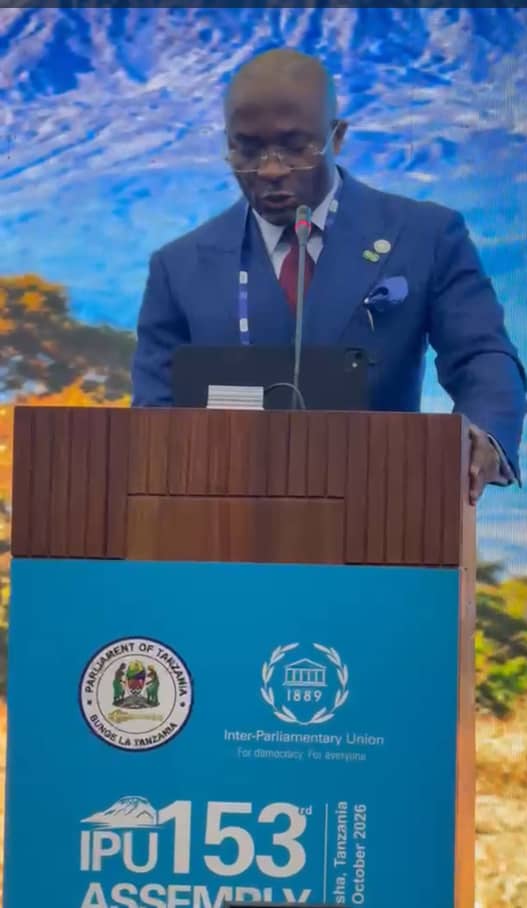
Kalu made the call on Thursday during a debate on “Urgent Parliamentary Action to Address Climate-related Disasters and Strengthen Resilience” at the ongoing 153rd Assembly of the Inter-Parliamentary Union (IPU) in Arusha, Tanzania.
The Deputy Speaker said global efforts to tackle climate change must move beyond ambitious pledges and translate into practical, bankable legislative actions capable of delivering tangible benefits to people and economies.
He proposed that the global legislative intervention should be built around two key pillars: the development of an investor-ready pipeline of priority projects covering clean energy, transport, agriculture, resilient infrastructure and the circular economy; and the establishment of a project-preparation and transaction-support platform to move viable projects from concept to bankability, financing and implementation.
According to Kalu, lawmakers have a critical role to play in creating the legal certainty and public accountability necessary to build resilient, competitive and sustainable economies.
He said climate change was already affecting communities and economies through irregular rainfall, declining agricultural yields, coastal erosion, rising sea levels, flooding, unreliable energy and climate-related displacement.
“Across the globe farmers are confronting irregular rainfall and declining yields; coastal communities are facing erosion and rising waters; businesses are losing productive hours to unreliable energy; and cities are struggling with flooding that overwhelms drainage systems and infrastructure,” Kalu said.
“Our people are already living with the consequences of extreme weather, flooding, land degradation, food insecurity and climate-related displacement. Climate finance must therefore support both emissions reduction and human resilience.”
The Deputy Speaker urged legislators to see themselves not merely as observers of the climate crisis but as “architects of the legal certainty and public accountability” required to deliver sustainable economic development.
“Legislation must not remain a statement of intent. It must become an instrument of delivery,” he said.
Kalu said the proposed framework would help transform climate ambitions into concrete projects, financing, infrastructure, jobs and economic opportunities.
“This is how ambition becomes action. This is how policy becomes finance. And this is how finance becomes infrastructure, jobs, resilience and shared prosperity,” he said.
Nigeria’s climate transition
Kalu said climate action in Nigeria should be viewed as both an environmental and economic issue, stressing that the country’s transition to a low-carbon economy must also address energy access, employment, food security and infrastructure resilience.
“For Nigeria, climate action is not an abstract environmental aspiration, but about whether a farmer can harvest despite changing rainfall patterns; whether a family can access affordable and reliable electricity; whether a young person can find dignified work in a modern economy; whether our cities can withstand floods; and whether Africa’s largest economy can industrialise without reproducing the environmental vulnerabilities of the past,” he said.
He criticised the slow implementation of international climate agreements, saying developing countries had continued to face inadequate, inaccessible and unaffordable climate finance despite years of ambitious international commitments.
According to him, Nigeria was not participating in the IPU Assembly merely to restate its challenges but to present investment opportunities.
He said the country was inviting investors to co-finance commercially viable and climate-resilient projects backed by legislation, public policy, accountable institutions and a legislature committed to implementation.
Kalu recalled that Nigeria announced at COP26 its commitment to achieving net-zero emissions by 2060 through the Nigeria Energy Transition Plan.
He described the plan as a development-centred pathway designed not only to reduce emissions but also to expand energy access, reduce poverty, create jobs and build a more resilient economy.
The Deputy Speaker said Nigeria’s updated Energy Transition Plan estimates that approximately US$500 billion in capital investment above business-as-usual spending would be required to achieve net-zero emissions by 2060.
He described the figure not merely as a financing gap but as a significant investment opportunity.
“This is not simply a financing gap; it is an investment horizon. It is an opportunity to build new markets, modernise infrastructure, create green jobs, unlock innovation and deliver long-term returns,” Kalu said.
Areas requiring investment
The Deputy Speaker identified distributed renewable energy, solar mini-grids, battery storage, clean cooking solutions, electricity transmission and distribution infrastructure, industrial energy efficiency and climate-smart agriculture among the priority areas for investment.
Others include irrigation, cold-chain logistics, food processing, electric mobility, mass transit, low-carbon urban transport, waste-to-value systems, methane reduction and green manufacturing.
He also highlighted the need for increased investment in adaptation measures, including flood-control systems, resilient drainage, coastal protection, nature-based solutions, climate-resilient housing and infrastructure.
Kalu further outlined areas where Nigeria’s legislature could strengthen its climate commitments, including implementation of the Climate Change Act, monitoring of climate-related public expenditure and development of credible carbon-market and green-finance frameworks.
He also called for reforms to improve investor protection and contract enforcement, transparent approval processes for green projects, expansion of state-level electricity markets and sustained engagement among government, investors and local communities.
The Deputy Speaker stressed that Nigeria’s energy transition must be inclusive and ensure that vulnerable communities benefit from the emerging green economy.
“Our message is simple: Nigeria’s green transition must be a just-transition. It must expand access to affordable energy, create decent work, support communities, equip young people with new skills, promote women’s participation in the green economy and ensure that no region or social group is left behind,” he said.