

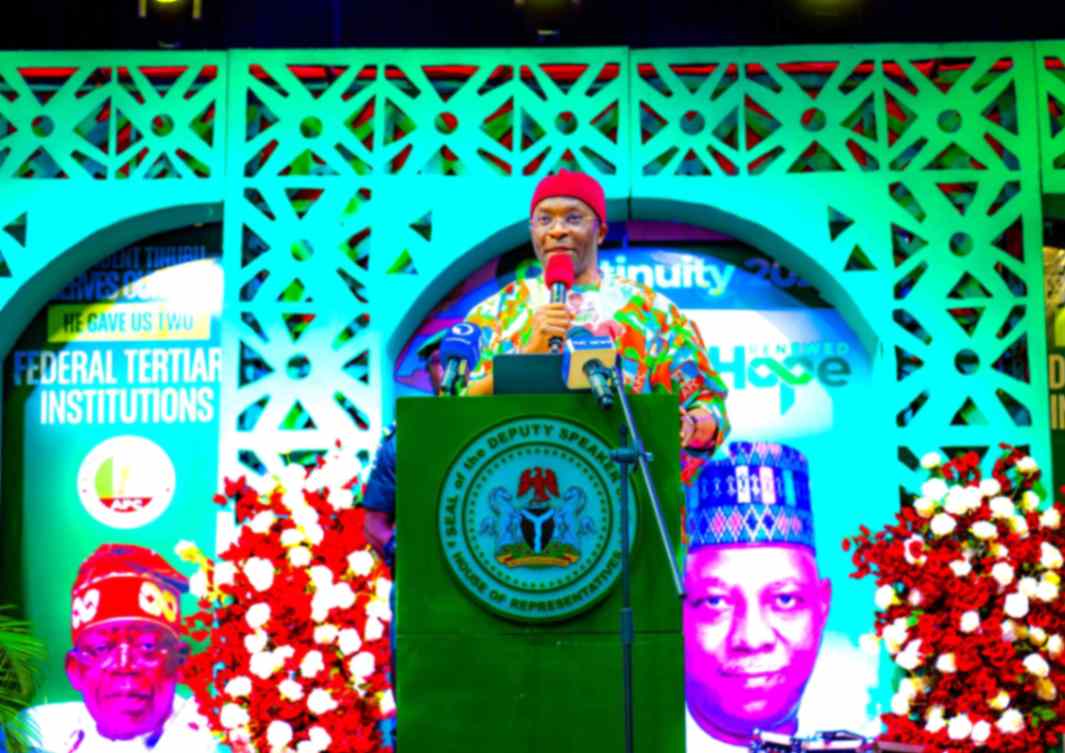
Deputy Speaker of the House of Representatives, Rt. Hon. Benjamin Okezie Kalu, has urged the people of the South-East to embrace strategic political alliances and support President Bola Ahmed Tinubu, describing political cooperation as essential to securing the region’s future and strengthening its influence in Nigeria.
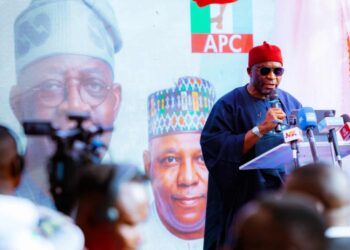
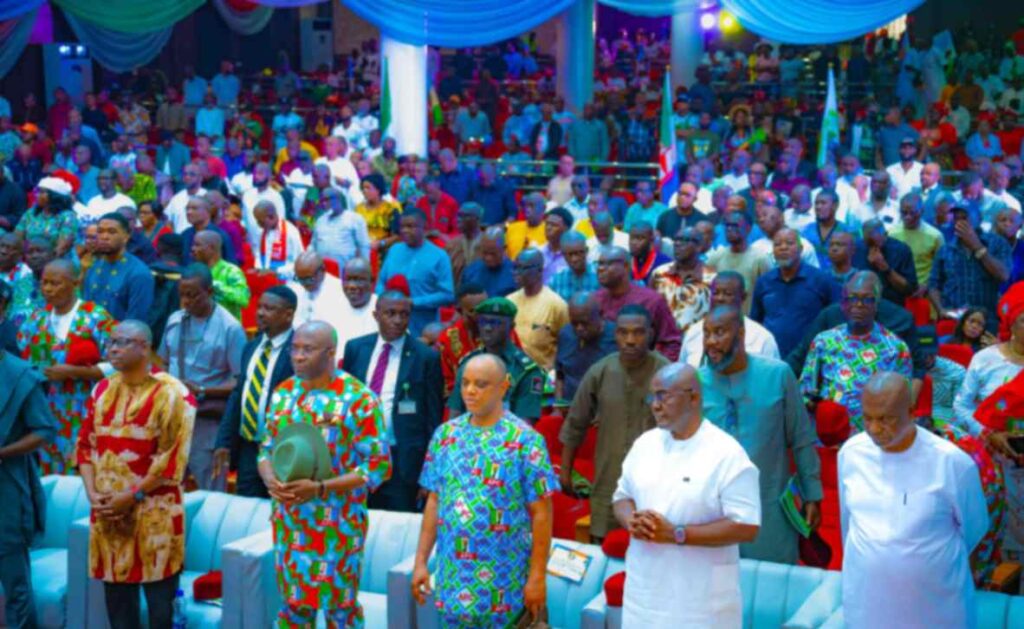
Kalu made the call on Thursday during the inauguration of the Abia State All Progressives Congress (APC) Campaign Council in Umuahia, where he urged Ndigbo to abandon what he described as sentimental political calculations and adopt a more strategic approach to political participation.
The Deputy Speaker, who represents Bende Federal Constituency in Abia State, said the Igbo people had demonstrated remarkable strategic thinking in business, particularly in rebuilding the South-East after the Nigerian Civil War, and should apply the same principles to politics.
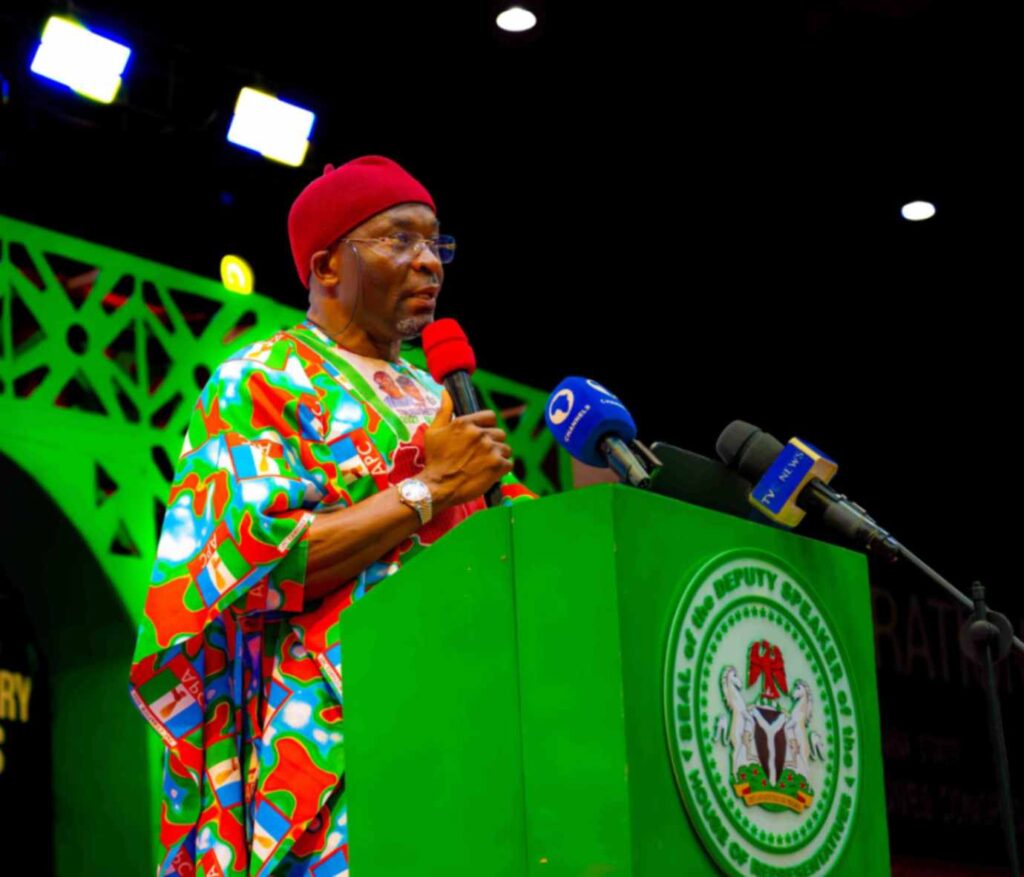
Photo Credit: Deputy Speaker’s Media Office
He argued that the region’s inability to translate its economic strength into corresponding political influence was partly due to its failure to build sustainable political alliances with other parts of the country.
According to him, political sentiments and isolation would not advance the interests of the South-East or guarantee the region access to the dividends of democracy.
“Sentiment does not drive political growth, participation, engagement and advancement. It does not drive the dividends of democracy. It is about time that we dropped sentiment and picked up strategy. And when I talk about strategy, I talk about political strategy. I talk about regional political alliance of Ndigbo,” Kalu said.
He maintained that the South-East must strengthen its political relationships across the country rather than pursue an isolated political agenda.
“To be alone is not an honour. To be alone is not a thing of pride. To work in silos is not what will define our people. We must come together with other regions, shake hands across the Niger so as to remain relevant in the scheme of things. Let no one deceive you that on our own, we can do it,” he added.
Kalu, who also serves as Deputy Director of the APC Presidential Campaign Council (South), recalled that previous efforts by political leaders to secure greater political opportunities for their people had recorded limited success until they embraced broader political alliances.
He warned that poor political calculations could further weaken the South-East’s position in national politics, insisting that the region must learn to invest its votes in political partnerships capable of producing meaningful returns.
The lawmaker identified President Tinubu as the preferred political platform for such an alliance, describing him as a leader whose political philosophy accommodates Nigerians across ethnic, religious and cultural backgrounds.
“There is no pride in waste. What is strategic is to invest our votes. And as Igbo, we have always made investments that yielded dividends. And that is why we are prosperous,” he said.
Explaining his support for the President, Kalu said his position was based on his belief in Tinubu’s approach to governance and his commitment to building institutions and legacies that would outlive his administration.
He described Tinubu as a leader who relates with Nigerians without discrimination based on their ethnic identity, language or skin colour, urging Ndigbo to support his political leadership.
Kalu further called on the South-East to take a more active role in determining its political future, saying the region must use its voting strength to secure a stronger position in the country’s political structure.
Kalu Rejects Four-Year Igbo Presidency Arrangement
The Deputy Speaker also dismissed the idea of a four-year presidential arrangement for the South-East, insisting that the region deserves an eight-year opportunity to produce Nigeria’s President after what he described as nearly six decades of waiting.
He cautioned against political proposals presented as an Igbo agenda if they did not guarantee what he considered a fair opportunity for the region.
“We cannot accept four years agreement. Igbo are bigger than four years agreement because we have waited for almost 60 years. When they come and preach to you that this is Igbo agenda, tell them that is a wasteful Igbo agenda,” he declared.
He, however, expressed confidence that the South-East would eventually have its opportunity to produce the nation’s President, urging the people not to lose hope.
“Our time will come. We have waited for too long but let us not be weary of well doing for in due season, we shall reap if we faint not. Our time is coming. The Igbo nation’s time is coming and when it comes, it will be eight and not four years,” he said.

Kalu Defends Tinubu’s Administration
Kalu also defended the performance of the Tinubu administration, arguing that the President had spent the last three and a half years laying the foundation for national development.
He expressed optimism that Nigerians would begin to see the results of the administration’s policies and investments as ongoing reforms and projects translate into visible improvements.
According to him, the government has established a foundation upon which further development can be built, adding that the administration’s efforts should be assessed in the context of its long-term objectives.
The Deputy Speaker also highlighted what he described as major achievements of the Tinubu administration in the South-East, noting that government interventions had covered several sectors of the regional economy.
However, he did not provide specific details of the projects during the remarks contained in the statement.
Charges 500-Member Campaign Council on Grassroots Mobilisation
At the event, Kalu formally inaugurated the Abia State APC Campaign Council, comprising more than 500 members, and charged them to take the message of the Renewed Hope Agenda to communities across the state.
He urged members to approach the assignment with discipline, commitment and unity, stressing that effective grassroots mobilisation would be critical to the party’s political activities ahead of the 2027 general elections.
Kalu also tasked the council with familiarising itself with federal government projects in Abia State and providing accurate information about their implementation status.
“I charge this Council to meet it with seriousness and discipline. Know the projects in Abia and their status, stay united in purpose, and be present in all 17 local governments and 184 wards,” he said.
South-East Political Future Requires More Than Electoral Alliances
As the 2027 general elections approach, Kalu’s appeal has again brought attention to the debate over the South-East’s political strategy, its relationship with other regions and its quest for greater representation at the federal level.
While strategic alliances may create opportunities for stronger political participation, the region’s stakeholders must also ensure that electoral partnerships are supported by clear commitments and measurable development outcomes.
Support for any political platform should translate into tangible benefits, including improved infrastructure, increased federal presence, economic opportunities, fair political representation and greater inclusion in national decision-making.
Beyond securing electoral victories, political leaders in the South-East must prioritise agreements that protect the long-term interests of the people and establish a clear pathway towards equitable participation in national leadership.
Ultimately, the region’s political strength will depend not only on where its votes go but also on the ability of its leaders to negotiate effectively, hold political partners accountable and ensure that alliances deliver lasting benefits to the people.
For Advertisement, Press Release, Sponsored Post and Tip-Off, Contact Us at: Email: Info@abacitybloq.com |Whatsapp: +2347038111972 | Telegram: @Abacityblog