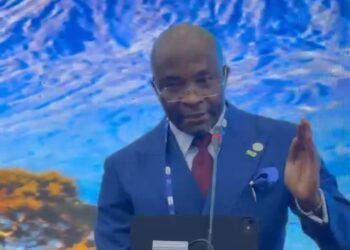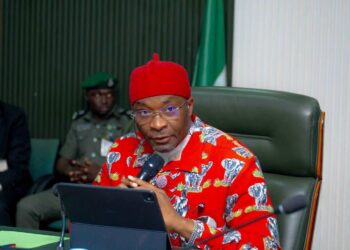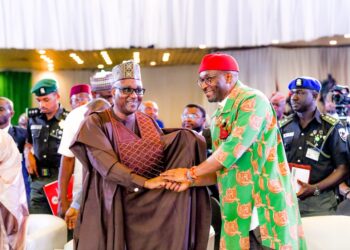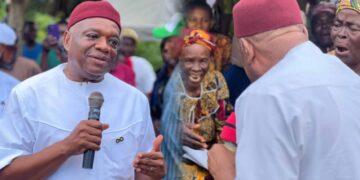


Nigeria’s ongoing economic reforms are stimulating economic growth and improving the ease of doing business, Deputy Speaker of the House of Representatives, Benjamin Okezie Kalu, has said, while calling for stronger efforts to translate the gains into jobs, food security and improved living conditions.
Kalu said Nigeria’s economy grew by 4.43 per cent in the second quarter of 2026, while inflation had eased and the country’s external reserves had risen above $55 billion.
The Deputy Speaker made the remarks while addressing the 153rd Assembly of the Inter-Parliamentary Union (IPU) in Arusha, Tanzania, where lawmakers from across the world gathered to deliberate on the theme, “Enhancing Good Governance and Empowering Communities Through Inclusivity, Trust and Opportunities for All.”
According to Kalu, Nigeria’s economic performance under President Bola Ahmed Tinubu reflects progress in the country’s reform agenda, although more work is required to ensure that the benefits reach ordinary citizens.
“Nigeria’s reforms have lifted growth to 4.43 percent in the second quarter of 2026, and ease of doing business has remarkably improved. Inflation has eased, and external reserves stand above 55 billion dollars, the highest in nearly two decades,” he said.
He stressed that the next phase of the reform process must focus on delivering tangible benefits to households and businesses, particularly through employment creation and improved food availability.
Kalu Highlights Digital Economy, Healthcare Reforms
Addressing Nigeria’s digital economy, Kalu said digital skills and technological literacy were becoming increasingly important for participation in the modern economy.
He noted that the National Assembly was working to equip young Nigerians with the skills needed to take advantage of emerging employment opportunities, while advancing legislative reforms in data protection, cybersecurity and broadband expansion.
The Deputy Speaker also identified healthcare as a critical area requiring sustained legislative attention, calling for policies that would strengthen primary healthcare, expand health insurance coverage and improve domestic pharmaceutical production.
According to him, greater local capacity in pharmaceutical manufacturing would strengthen health security and help build public confidence in the country’s healthcare system.
“These principles continue to guide Nigeria’s development journey under President Bola Ahmed Tinubu, with Parliament reinforcing them through law. We have not yet reached our destination, but we have made considerable strides,” he said.
Deputy Speaker Calls for Stronger Food Security Measures
On food security, Kalu emphasised the need to expand access to mechanised farming, irrigation and credit facilities, particularly for rural farmers.
He said such interventions must reach communities that risk being excluded from the benefits of economic development.
The Deputy Speaker maintained that inclusive development requires deliberate policies that create opportunities for vulnerable communities and ensure that economic progress translates into improved livelihoods.
Kalu Defends State Police Amendment, Stresses Justice
On security, Kalu pointed to a constitutional amendment passed by the National Assembly in June 2026 to enable the establishment of state police, describing the move as an effort to bring security closer to communities.
However, he cautioned that improved security arrangements alone would not guarantee lasting peace without justice, accountability and public confidence in state institutions.
“Citizens trust institutions when courts are fair and affordable, and when the powerful answer to the same law as the poor,” he said.
He argued that accessible justice and equal application of the law were essential to building trust between citizens and public institutions.
Kalu Urges Climate-Conscious Lawmaking
The Deputy Speaker also warned that climate change posed a fundamental challenge to development, urging parliaments across the world to incorporate environmental considerations into lawmaking.
He called on lawmakers to adopt an “earth-first” approach when formulating policies, stressing that environmental sustainability should not be treated as a separate issue from economic growth and social development.
“But all of this rests on one condition. There must be a planet tomorrow. Climate change is not a separate agenda item, it is the ground beneath every other agenda item,” Kalu said.
He urged legislatures to ensure that laws and policies account for the long-term environmental consequences of development decisions.
Kalu added that Nigeria’s development priorities remained centred on building trust, expanding opportunities and promoting inclusion through legislative action.
Australian Parliament Speaker Elected IPU President

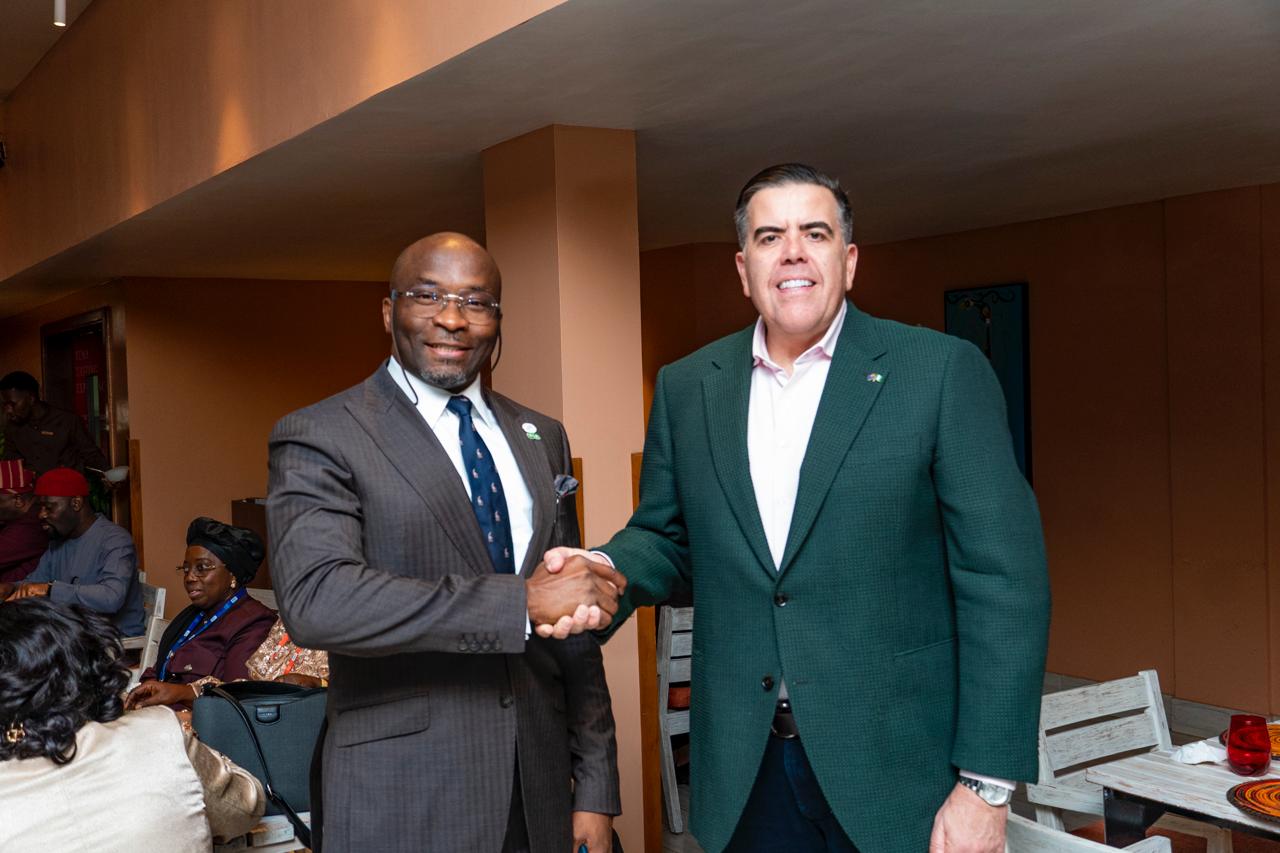
Meanwhile, the 153rd IPU Assembly elected the Speaker of the Australian Parliament, Rt. Hon. Milton Dick, as its new president.
Dick is expected to succeed Tanzania’s Speaker, Tulia Ackson, who was elected IPU president in 2023.
The Nigerian delegation’s participation in the assembly comes amid efforts to strengthen parliamentary cooperation and exchange ideas on governance, economic development, security and climate action.
Dick had visited Nigeria’s National Assembly ahead of the assembly to seek the support of the Nigerian delegation for his bid for the IPU presidency.
The IPU is an international organisation of national parliaments that provides a platform for parliamentary dialogue, cooperation and the promotion of democratic governance.
Kalu concluded that legislative action should help strengthen public trust, expand opportunities and guarantee inclusion as Nigeria continues its development journey.